A Table for One: Why Solo Lounge Nights Have Become the New Urban Ritual
There is a particular kind of confidence required to walk into an upscale lounge alone on a Saturday evening, request a seat at the bar, and settle in with the unhurried ease of someone who has nowhere else to be. It is a confidence that, until recently, relatively few people in American nightlife culture felt entitled to claim.
That is changing. Across major cities — New York, Chicago, Austin, Los Angeles, Atlanta — a quiet but unmistakable shift is underway. The solo lounge-goer, once an anomaly regarded with either pity or curiosity, has emerged as a recognizable and increasingly respected figure in upscale nightlife. They arrive alone by design, not by default. And the city's finest venues are beginning to curate their spaces with this guest in mind.
The End of the Group-or-Nothing Assumption
For decades, American nightlife has operated on an implicit social contract: you arrive in numbers. The group provided safety, legitimacy, and a ready-made social structure. To enter a lounge alone was to court a kind of invisible judgment — from staff, from other guests, from oneself.
This assumption, it turns out, was always more fragile than it appeared. The pandemic years accelerated an already-emerging cultural recalibration around solitude and self-sufficiency. Millions of Americans discovered — often by necessity — that they were capable of occupying their own company with a degree of satisfaction they had not previously granted themselves. Dining alone lost its stigma. Solo travel surged. And as nightlife returned, a meaningful subset of urban professionals decided they did not wish to surrender what they had learned.
Amanda Reyes, a thirty-four-year-old marketing director based in Brooklyn, describes her evolution into a regular solo lounge visitor with characteristic directness. "I used to wait until I could coordinate with four other people before I'd go anywhere worth going," she says. "Then I realized I was spending more time scheduling than actually living. Now I go when I want to go. The experience is entirely mine."
What Venues Are Doing Differently
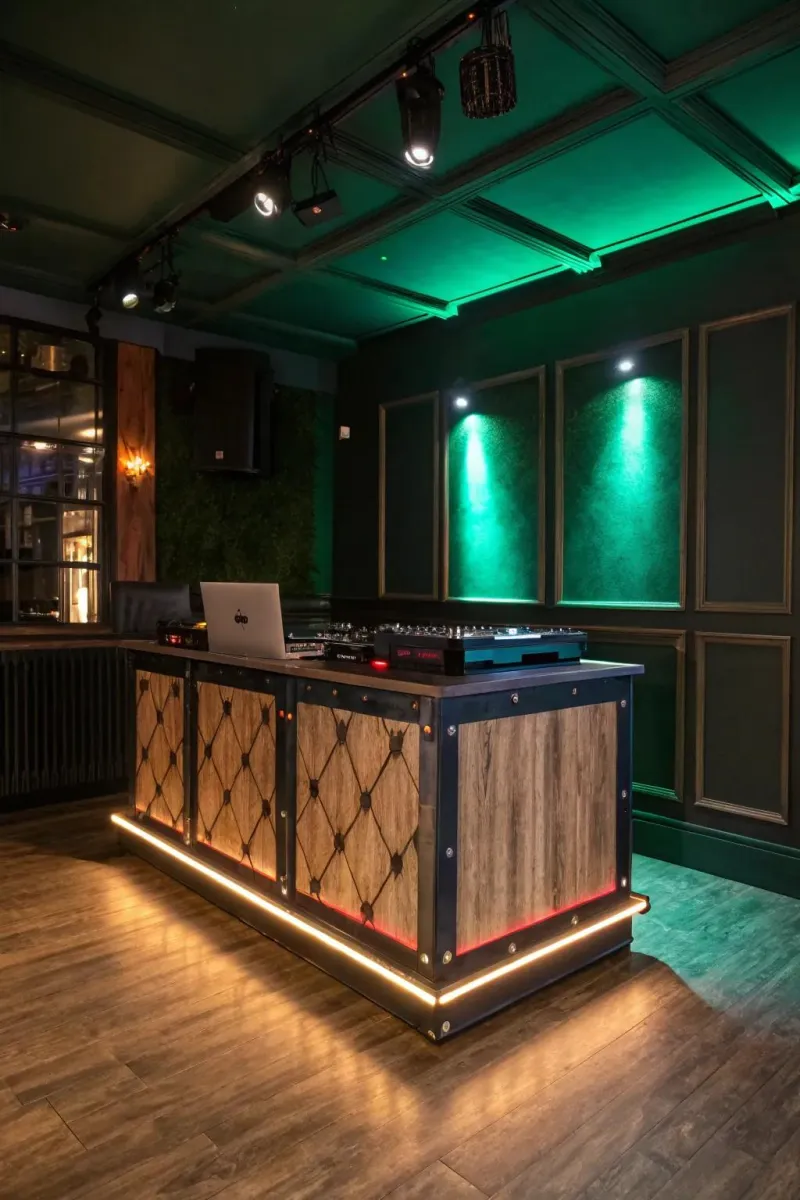
Forward-thinking lounge operators have recognized this demographic shift and responded with tangible changes to their hospitality philosophy. The most visible adaptation is in seating design. Where once bar seating was an afterthought — a functional perch for guests waiting on a reservation — it is now frequently the most thoughtfully appointed real estate in the room.
Bar counters in newly renovated and purpose-built lounges are wider, better lit, and more deliberately positioned to offer both privacy and a view of the room. Single-guest menus or curated tasting sequences, presented without the assumption of a group context, are appearing in venues from Nashville to San Francisco. Some establishments have introduced what they quietly call 'solo-friendly' hours — early evening windows when the bar team is instructed to be especially attentive and conversationally engaged with unaccompanied guests.
"The solo guest is actually our most attentive customer," says one Chicago lounge manager who requested anonymity to speak candidly about internal hospitality philosophy. "They're not distracted by a group dynamic. They're present. They notice everything — the quality of the ice, the music selection, the way you greet them. If you get it right, they become your most loyal regulars."
The Cocktail as Companion
For the solo lounge-goer, the drink order carries a weight it might not bear in a group setting. Without a companion's input or the social performance of shared decision-making, the selection becomes a private act of self-expression — a declaration of taste that belongs entirely to the individual.
This dynamic has not been lost on the cocktail culture at large. Bartenders at upscale lounges report that solo guests tend to engage more deeply with the menu, ask more considered questions, and express a genuine interest in the craft behind what they are drinking. They are, in the truest sense, present for the experience.
There is also something to be said for the ritual itself. The act of selecting a well-made cocktail — studying the menu, consulting with the bartender, observing the preparation — provides a structure that can anchor an otherwise unscripted evening. It is, for many solo visitors, the opening act of a night that belongs entirely to them.
Confidence as the Only Dress Code
The most common question posed to those who have embraced solo lounge culture is some variation of: Doesn't it feel strange? The honest answer, from virtually everyone who has made the practice their own, is: initially, yes. And then, emphatically, no.
The strangeness, it seems, dissolves quickly once one realizes that the imagined scrutiny of other guests is largely fictional. Most people in an upscale lounge are far too absorbed in their own conversations, their own drinks, and their own evenings to devote sustained attention to the person seated alone at the bar. And those who do notice — bartenders, adjacent guests, the occasional curious stranger — are, more often than not, simply curious in the best possible way.
"People ask me if I'm waiting for someone," Reyes notes. "I tell them I'm not. And then something interesting usually happens — a real conversation, the kind you can't have when you're already locked into a group dynamic."
This, perhaps, is the most compelling argument for the solo lounge night: it creates an openness that group attendance forecloses. Without the social gravity of companions to orbit, the lone guest becomes available to the room in a way that is genuinely rare in urban social life.
An Evening Entirely Your Own
The rise of the solo lounge-goer is, at its core, a story about the expansion of personal freedom in American social culture. It reflects a growing willingness to prioritize one's own experience over the logistics of coordination, and a deepening comfort with the idea that a night out need not be shared to be meaningful.
For the venues that recognize this guest — that welcome them without condescension, seat them with care, and serve them with the same attentiveness afforded to a party of six — the reward is considerable. Solo guests return. They recommend. They become, in the truest sense, regulars.
And for the guest themselves, the reward is simpler still: an evening that answers to no one, shaped by no compromise, and remembered entirely as one's own.