Sound Architecture: The Hidden Science Behind How Lounges Program Your Perfect Evening
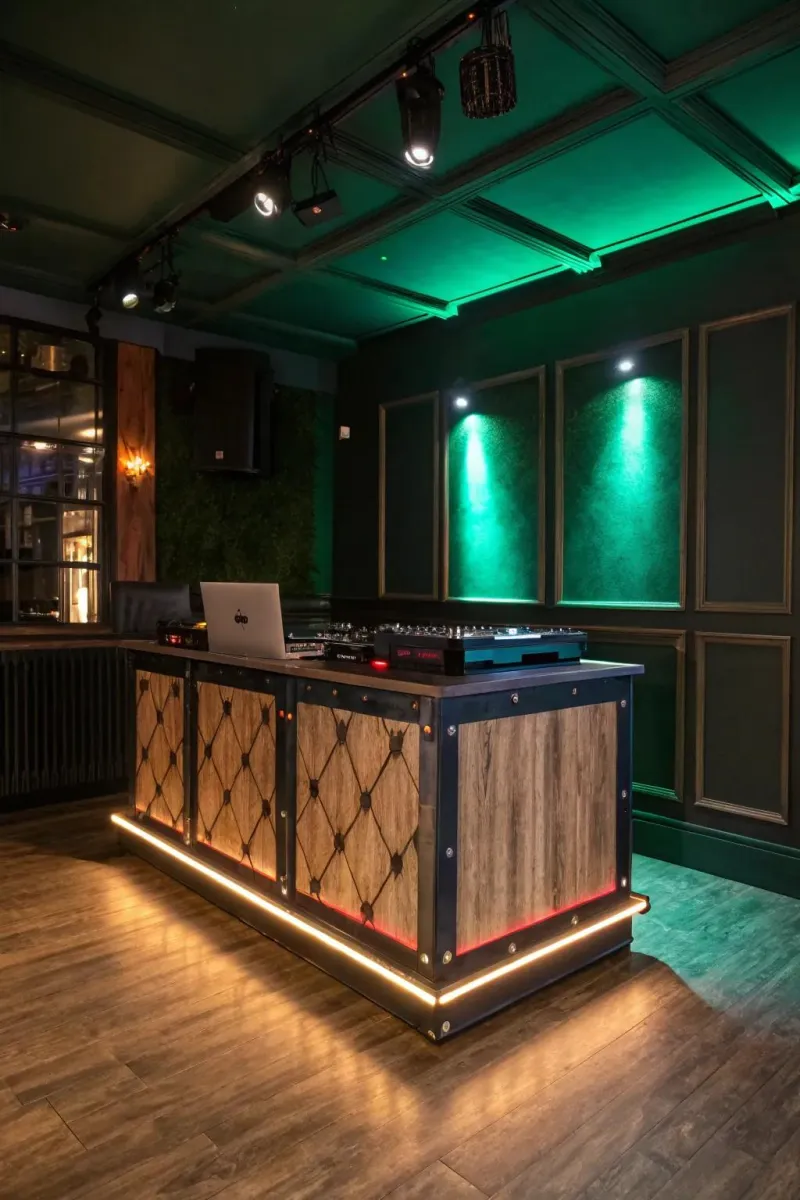
Photo: DJ booth upscale lounge nightclub ambient lighting sound mixer, via vervilla.com
Step into any distinguished lounge in Manhattan, Chicago, or Los Angeles on a Friday evening, and you will encounter something that feels effortless — a mood, a pulse, an invisible energy that seems to arrive fully formed. Guests settle into their seats with an ease they cannot quite name. Conversations unfold naturally. The night, as they say, begins to breathe.
What most guests never realize is that this atmosphere is engineered, note by note, beat by beat, with a level of intentionality that rivals the cocktail menu or the lighting design. The lounge playlist — far from a background detail — is one of the most sophisticated instruments a venue has at its disposal.
The Architecture of an Evening
DJ and sound consultant Marcus Ellery, who has curated programming for venues across the East Coast for more than a decade, describes his approach in architectural terms. "You're building a room with sound," he explains. "The early hours are the foundation — they need to feel welcoming, warm, and just interesting enough to signal that this is not an ordinary place. You're not trying to excite anyone yet. You're inviting them in."
This early-evening philosophy typically favors what industry professionals call 'deep listening' tracks — jazz-inflected electronica, neo-soul, downtempo R&B, or carefully selected acoustic arrangements that reward attention without demanding it. The goal is to lower the psychological threshold of arrival, making guests feel that they have stepped into a space that already understands them.
As the evening progresses, the curation shifts. Tempos rise incrementally — a process so gradual that guests rarely perceive it consciously. By nine o'clock in most upscale venues, the BPM (beats per minute) has climbed from a languid 75 or 80 to something closer to 100 or 105. The effect on behavior is measurable: voices grow slightly louder, posture opens up, and guests begin to engage more freely with those around them.
The Psychology of Sonic Influence
The science supporting this approach is substantial. Research in environmental psychology has long established that music tempo, volume, and genre directly influence consumer behavior — from how quickly people eat to how much they spend. In a lounge context, these variables translate into something more nuanced: how long guests linger, how generously they order, and whether they return.
Dr. Serena Voss, a behavioral researcher who has consulted with hospitality groups in New York and Miami, notes that the key variable is not simply tempo but perceived familiarity. "The brain responds very differently to a song it almost recognizes versus one it knows completely," she explains. "That feeling of 'I know this, but not quite' — that sweet spot — keeps people engaged and slightly elevated emotionally. It's a state that's very conducive to social openness and enjoyment."
This is why the most accomplished lounge curators rarely play obvious hits in their original form. Instead, they favor reimagined versions — a jazz reinterpretation of a classic pop song, an acoustic cover of a well-known hip-hop track, or a deep cut from an artist the guest knows only by reputation. The familiar made slightly strange is, it turns out, the sound of a memorable night.
Genre as Emotional Language
Venue director Camille Fontaine, who oversees programming at a members-only lounge in Chicago's River North neighborhood, describes genre selection as a form of emotional storytelling. "Every genre carries a cultural weight, a set of associations," she says. "When I open with a certain style of Brazilian jazz, I'm not just playing music — I'm making a promise about the kind of evening this is going to be. I'm telling guests that we are sophisticated, unhurried, and interested in beauty."
Fontaine's approach involves what she calls 'genre bridges' — transitional tracks that carry the DNA of two distinct styles, allowing the playlist to shift without jarring the listener. Moving from neo-soul into house music, for instance, requires careful navigation. The wrong track can fracture a mood that has taken two hours to build.
This sensitivity extends to silence itself. Many curators are deliberate about the micro-pauses between tracks — gaps of one or two seconds that allow the room to breathe and guests to feel the transition without being startled by it. "Silence is part of the composition," Ellery notes. "A room that never pauses starts to feel relentless. A brief moment of quiet makes the next song feel like a gift."
Volume as a Social Variable
Perhaps no sonic element is more consequential — or more frequently mismanaged — than volume. In the early hours of an upscale lounge evening, music should be present but not dominant. Guests must be able to converse without effort. The music serves as a social lubricant, not a barrier.
As midnight approaches in venues that program later into the evening, the calculus changes. Volume rises deliberately, and the music shifts from accompaniment to experience. At this stage, guests are no longer primarily there to talk — they are there to feel. The lounge has become something closer to a concert, and the curator's job shifts accordingly.
Fontaine is careful to note, however, that volume escalation must never feel imposed. "You want guests to arrive at the louder, more energetic part of the evening because the night has carried them there," she says. "If they feel pushed, you've lost them. The best programming feels inevitable — like the night couldn't have gone any other way."
The Human Element in a Digital Age
In an era when algorithmic playlists have become the norm in many casual settings, the deliberate, human-led curation of an upscale lounge represents something increasingly rare: a considered artistic vision applied to the act of hospitality. The best lounge curators read the room continuously, adjusting their selections in real time based on the energy they observe — the density of the crowd, the tone of conversations, even the weather outside.
"Spotify can give you a playlist," Ellery says with measured directness. "It cannot give you a night. That still requires a human being who is paying attention."
For guests, understanding this invisible craft need not diminish the magic of it. If anything, knowing that someone has thought carefully about every sonic moment of your evening is its own form of hospitality — a reminder that the finest lounges consider not just what you drink or where you sit, but how the night itself sounds as it unfolds around you.