Chasing the Season: How Elite Lounges Turn Fleeting Ingredients Into Year-Round Loyalty
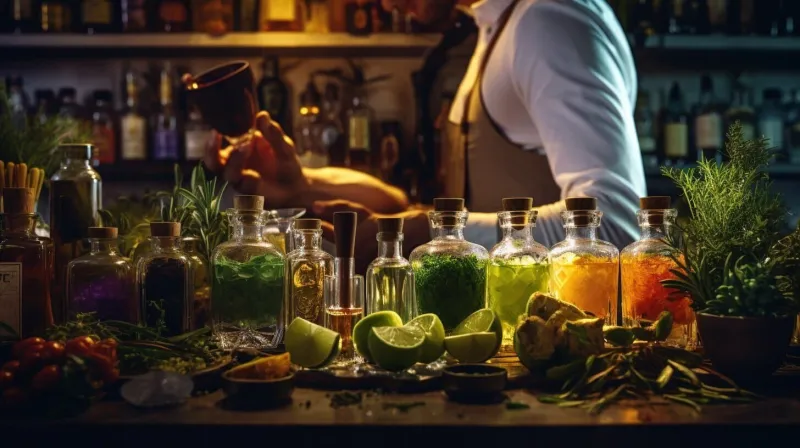
Photo: mixologist crafting seasonal cocktail with fresh fruit and herbs in upscale lounge bar, via petitechefs.com
There is a particular kind of regularity that the finest lounges in America aspire to cultivate — one that has nothing to do with routine and everything to do with desire. Walk into a top-tier urban lounge in late September and the cocktail menu you admired in July has quietly transformed. The bright, citrus-forward constructions of summer have given way to something warmer, more contemplative: a smoked fig old fashioned, perhaps, or a pear-and-cardamom sour that arrives with an almost theatrical flourish of autumn spice. The drink in your hand is, by design, temporary. And that temporality is the point.
Across the country, from the intimate lounges tucked into Chicago's West Loop to the rooftop bars commanding views of downtown Los Angeles, a deliberate philosophy is reshaping how premium cocktail programs are built. The seasonal menu rotation — once considered a novelty borrowed from the farm-to-table dining world — has become one of the most sophisticated tools in a lounge's arsenal for driving repeat visits and deepening guest loyalty.
The Architecture of Anticipation
To understand why seasonal cocktail menus work, one must first understand what they ask of the guest. Unlike a static menu, which invites comfort and predictability, a rotating selection introduces a subtle but powerful emotional variable: the possibility of missing out.
"We never announce a menu change in advance," explains a lead mixologist at a celebrated cocktail lounge in New York's Flatiron district. "Guests find out when they arrive and discover something new on the menu — or something they loved is gone. That element of surprise is incredibly effective. People come back sooner because they don't want to miss the window."
This is not accidental psychology. Behavioral economists have long documented the outsized weight that scarcity places on perceived value. When a cocktail is available only while a particular ingredient is at its peak — Meyer lemons in winter, rhubarb in early spring, Concord grapes in the brief weeks of September — its desirability rises in direct proportion to its limited availability. The lounge, in effect, creates urgency without ever resorting to promotional language.
From Farm to Shaker: The Sourcing Imperative
The seasonal cocktail movement is inseparable from the broader American renaissance in local and artisanal food sourcing. Many of the country's most respected lounge programs now maintain direct relationships with regional farms, orchards, and specialty producers — arrangements that would have seemed eccentric a decade ago but are now considered a hallmark of serious craft.
A bar director at a celebrated lounge in Nashville describes the rhythm of her sourcing calendar as something close to a culinary discipline. "In May, I'm already calling my contact at a Tennessee berry farm to find out what the blackberry harvest looks like. By June, I know what I'm working with. The cocktail concept follows the ingredient — not the other way around."
This philosophy demands a kind of intellectual flexibility that distinguishes elite mixologists from their more formulaic counterparts. A seasonal ingredient rarely announces itself with an obvious cocktail application. The craft lies in finding the right spirit partner, the appropriate level of sweetness or acidity, and the garnish or technique that allows the ingredient's character to speak without being overwhelmed.
Limited-edition spirits add another dimension to this equation. The annual releases from American craft distilleries — barrel-aged expressions, harvest-specific whiskeys, botanically distinct gins — give lounge programs access to ingredients that are, by their nature, impossible to replicate. A lounge that secures allocation of a single-barrel bourbon released in quantities of fewer than three hundred bottles can offer a cocktail that no competing venue can reproduce, creating a form of exclusivity that money alone cannot manufacture.
The Transition Moments That Define a Program
Perhaps the most telling measure of a lounge's cocktail sophistication is not its peak-season menu, but the way it navigates the transitions between seasons. The weeks between summer and fall, or between winter and early spring, are where lesser programs falter — defaulting to generic flavor profiles while waiting for the next season's ingredients to arrive.
The best programs treat these transitional periods as creative opportunities. A mixologist based in San Francisco describes her late-summer menu as deliberately liminal. "We lean into the tension between what's ending and what's beginning. You might have a cocktail that uses the last of the stone fruit alongside the first green walnuts of the season. It's a very specific flavor moment that only exists for about three weeks. Guests who experience it feel like they caught something rare."
This sense of having witnessed something fleeting is, according to lounge operators, among the most powerful drivers of word-of-mouth. Guests who feel they have experienced a cocktail at its singular, unrepeatable best are naturally inclined to share that experience — and to return before the opportunity closes.
Loyalty Built on Novelty
The conventional wisdom in hospitality has long held that loyalty is built through consistency: guests return because they know what to expect. The seasonal cocktail model challenges this assumption directly, proposing instead that loyalty can be cultivated through the expectation of change itself.
"Our most loyal guests are the ones who trust us to surprise them," notes a lounge owner in Washington, D.C. "They don't come back because they want the same thing. They come back because they want to see what we've done next. That's a different kind of trust — and a much deeper one."
For lounges operating in competitive urban markets, this distinction is commercially significant. A guest who returns four times a year to experience each seasonal menu transition is, by definition, more valuable than one who visits once and considers the experience complete. The seasonal model transforms the lounge from a destination into a subscription — one renewed not by direct debit but by genuine desire.
As the American cocktail landscape continues to mature, the lounges that will define the next chapter are those that understand an essential truth: the most compelling reason to return is always the thing that won't be there forever.