Trust the Bartender: How Human Intuition Is Outperforming the Digital Drink Menu
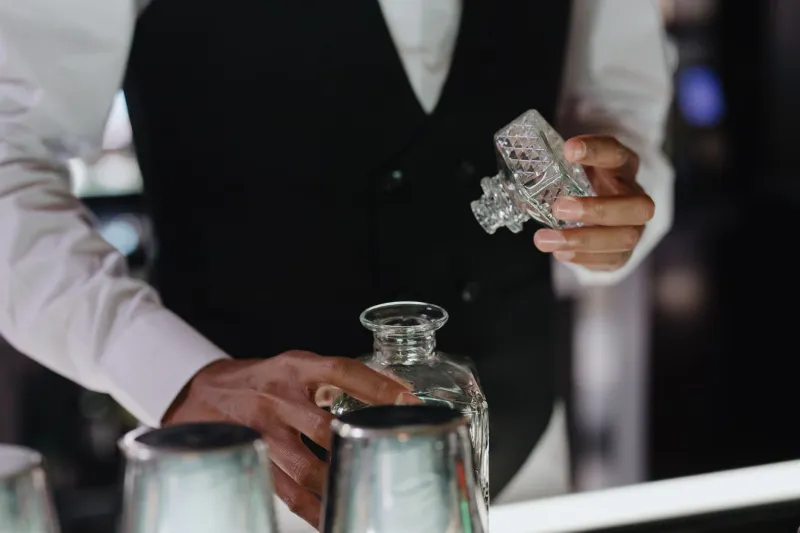
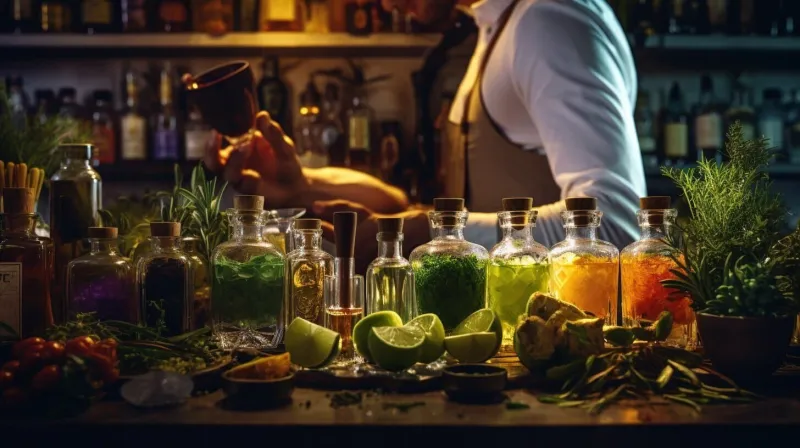
There is a particular kind of magic that unfolds in the first sixty seconds after you settle onto a barstool at a well-run lounge. Before you've scanned the menu, before you've decided between a whiskey and a glass of something sparkling, the bartender has already begun forming a theory about you. Your posture. The cadence of your conversation. Whether you arrived alone or with a group, and whether that group looks celebratory or quietly tense. By the time you make eye contact and offer a simple "I'm not sure what I want tonight," the professional behind the bar may already know.
This is not intuition as mysticism. It is a practiced, deeply human skill — and in the most distinguished lounges operating across New York, Chicago, Los Angeles, and beyond, it has become one of the defining competitive advantages a venue can possess.
The Psychology Behind the Pour
Trust, as any behavioral psychologist will confirm, is not built through information alone. It is built through attunement — the sense that another person genuinely perceives you, rather than simply processes your request. When a bartender recommends a drink, they are doing something fundamentally different from what a digital menu or a cocktail-pairing algorithm can accomplish. They are responding to a living, breathing, emotionally present human being.
Dr. Robert Cialdini's foundational work on influence identifies liking and authority as two of the most potent drivers of human decision-making. A skilled bartender embodies both. They are an authority on the craft — the provenance of spirits, the architecture of flavor, the seasonal availability of ingredients — while simultaneously presenting as someone genuinely invested in the guest's enjoyment. That combination, rare in most commercial transactions, creates a form of loyalty that no loyalty points program has yet managed to replicate.
When a guest accepts a bartender's recommendation and the drink exceeds their expectations, something neurologically significant occurs. The brain registers not just pleasure from the cocktail itself, but a kind of social reward — the satisfaction of having been understood. That reward is attached to the person who provided it, and by extension, to the venue that employs them.
Reading the Room, One Guest at a Time
Ask any seasoned bartender in a high-volume urban lounge what separates an average shift from an exceptional one, and the answer rarely involves a particularly complex recipe. It involves reading people correctly.
"You learn to recognize the difference between someone who wants to be guided and someone who wants to feel like they arrived at the decision themselves," explains a lead bartender at a prominent cocktail lounge in Chicago's River North neighborhood. "For the first type, you make a clear, confident recommendation and explain it simply. For the second, you ask a few well-placed questions and let them feel like they built the drink with you."
This distinction matters enormously. A recommendation that feels imposed creates resistance; one that feels collaborative creates ownership. The guest who feels like a co-creator of their evening's experience is far more likely to return — and far more likely to describe that experience enthusiastically to others.
The art of reading a room extends beyond individual interactions. A skilled bartender calibrates the entire atmosphere of their section, modulating the pace of service, the warmth of conversation, and even the sequence of drinks offered based on the collective energy of the guests present. On a slow Tuesday evening, a lengthy conversation about the origin of a particular mezcal is welcome. On a packed Friday night when a bachelorette party and a corporate client dinner are sharing the same bar rail, efficiency and precision become the primary vocabulary.
Why the Menu Can Only Take You So Far
The modern cocktail menu is, in many respects, a work of art. The finest lounges invest considerable resources in their design — commissioning original photography, writing evocative descriptions, sourcing rare spirits that merit their own footnotes. And yet, for all its visual appeal, the menu operates from a fundamental limitation: it cannot ask you how your day went.
Algorithmic recommendation engines, increasingly deployed through tableside tablets and venue apps, face the same constraint, compounded by an additional problem. Guests are often aware they are being nudged toward high-margin items, and that awareness — however subtle — introduces a friction that erodes trust. The menu suggests; the algorithm optimizes. Neither truly listens.
The bartender, by contrast, operates with complete contextual awareness. They know which bottles arrived this week and which are nearly depleted. They know that a guest who ordered a Negroni last visit might be ready to try its lesser-known sibling, the Sbagliato, now that a particularly fine prosecco has come in. They know, with a glance, whether tonight calls for something bright and effervescent or something slow and contemplative.
This capacity for real-time, relationship-informed curation is precisely what the best lounges in America are now recognizing as irreplaceable.
The Return Investment of Genuine Connection
The business case for investing in exceptional bartending talent is, at this point, well established among operators who track their numbers carefully. A guest who returns because they love a venue's playlist or its interior design is loyal to an aesthetic. A guest who returns because a specific bartender made them feel genuinely seen is loyal to a relationship — and relationships, in the hospitality industry, translate directly into frequency of visit and average spend per occasion.
Several of the most talked-about lounges in cities like Nashville, Miami, and Washington, D.C., have begun structuring their hiring and training processes around what might be called emotional intelligence benchmarks. Technical skills — the ability to execute a precise dilution, to understand the Maillard reaction in a smoked cocktail, to balance acid against sweetness — are treated as baseline qualifications. What distinguishes a candidate is their capacity for genuine curiosity about the people they serve.
"We can teach technique," notes the beverage director of a well-regarded lounge in Manhattan's Flatiron District. "What we cannot teach is the instinct to care. That has to be there already."
The Quiet Revolution Happening Behind Every Bar
There is a broader cultural shift embedded in this conversation. At a moment when so much of daily life is mediated by screens, platforms, and recommendation engines that know our preferences but not our moods, the act of being genuinely read by another human being carries an almost startling emotional weight. The lounge, at its best, is one of the last spaces in American urban life where that experience is not only possible but expected.
When a bartender slides a glass toward you and says, simply, "I think you'll like this tonight" — and they're right — the drink itself almost becomes secondary. What you've been given is something rarer: the experience of being known, if only for an evening, by someone who was paying attention.
That, more than any menu, more than any algorithm, is what keeps the barstool occupied and the reservation booked.
And that is precisely why, at Avenue Lounge, the conversation always begins with the person behind the bar.