Between the Pour and the Pause: The Quiet Psychology of Lounge Confessions
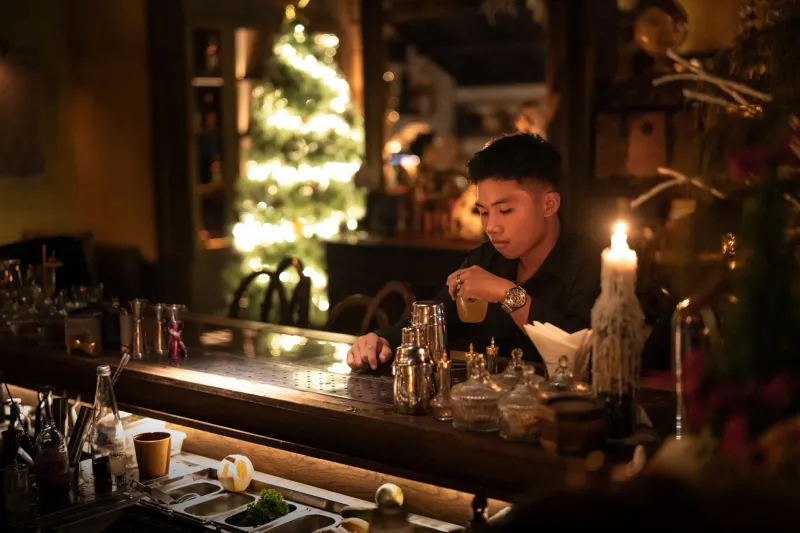
It begins, almost always, with the second drink.
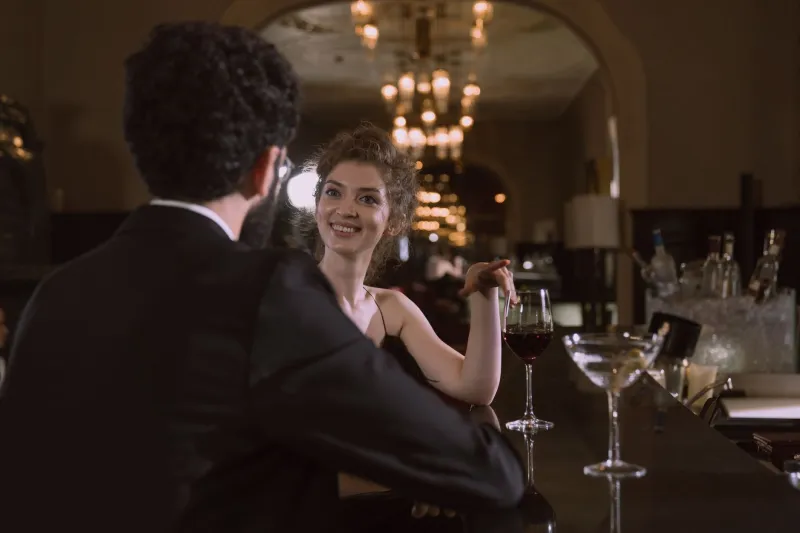
The first cocktail is ceremonial — a declaration of arrival, a signal to the nervous system that the workday has officially surrendered. But the second? That is when the guard lowers. That is when a guest at the corner of a mahogany bar might turn to a stranger, or to the bartender quietly polishing a coupe glass, and say something they have never said aloud to anyone.
Across America's most distinguished lounges, this phenomenon unfolds nightly, with a quiet consistency that has begun attracting the attention of psychologists, sociologists, and the bartenders themselves — people who have, for years, served as unexpected custodians of some of their city's most private moments.
The Architecture of Intimacy
Dr. Renata Hollis, a clinical psychologist based in Chicago who has consulted with hospitality groups on guest experience design, describes the upscale lounge as what she calls a "permission environment" — a space engineered, whether intentionally or not, to lower the psychological cost of vulnerability.
"There are several environmental factors converging at once," she explains. "Reduced lighting activates a sense of anonymity even in public spaces. The ambient sound — particularly live jazz or carefully curated low-tempo music — fills cognitive space in a way that quiets the internal critic. And the physical positioning at a bar, sitting side by side rather than face to face, removes the social intensity of direct eye contact. Therapists actually replicate this deliberately in certain treatment modalities."
The parallel to therapeutic space is not incidental. The lounge occupies what urban anthropologists have begun calling a liminal zone — neither the structured accountability of the office nor the intimate familiarity of home. It is, in the most literal sense, a threshold. And thresholds, historically, have always been places where people speak freely.
The Bartender as Confessor
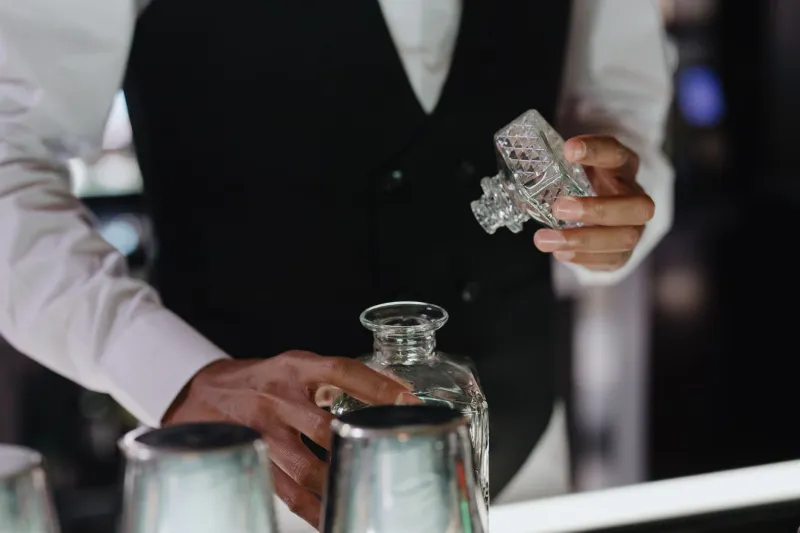
Marco Ellison has tended bar at a high-end lounge in Manhattan's Flatiron District for eleven years. In that time, he estimates he has heard more than most licensed therapists accumulate across entire careers.
"I've had CEOs cry at this bar. I've had people tell me about affairs they've never admitted to their spouses. I've had guests describe entire lives they've built in secret," he says, without a trace of sensationalism. "And they're not drunk when they say it, most of the time. They're just... released."
Ellison attributes much of this to what he calls the "asymmetrical relationship" between bartender and guest. "I know everything about them in this moment, and they know almost nothing about me. There's no social debt. Whatever they say here doesn't travel. It doesn't alter how their colleagues see them or how their family treats them at Sunday dinner. It simply exists, and then it's gone."
This dynamic — the combination of genuine attentiveness and social consequence-free disclosure — mirrors what psychologists refer to as the "stranger on a train" effect, a well-documented phenomenon in which people reveal intimate information to strangers they are unlikely to encounter again precisely because the interaction carries no long-term relational weight.
What the Spirits Themselves Contribute
It would be incomplete to discuss lounge confessions without acknowledging the role of alcohol — though perhaps not in the reductive way the subject is often approached.
Quality spirits, served thoughtfully and in appropriate measure, do not simply lower inhibition. According to Dr. James Okafor, a neuroscientist at the University of Pennsylvania whose research touches on social bonding and substance use, moderate alcohol consumption specifically amplifies prosocial behavior and increases a person's inclination toward self-disclosure.
"What's interesting about the upscale lounge context," Dr. Okafor notes, "is that the quality of the experience tends to slow consumption. Guests are savoring. They're engaged. So you're more likely to see someone at a measured, socially optimal level of openness rather than impaired. The environment actually moderates the substance, in a sense."
This is the distinction that separates a well-appointed lounge from a crowded bar. The former invites a guest to inhabit the evening; the latter too often encourages them to escape it.
The Epidemic Hiding in Plain Sight
There is a darker undercurrent to this conversation, one that the most thoughtful bartenders acknowledge with a kind of quiet gravity.
America is, by nearly every measurable index, in the midst of a loneliness crisis. The U.S. Surgeon General's advisory on the subject, released in 2023, described epidemic-level social disconnection affecting adults across all age groups and demographics. The data is stark: millions of Americans report having no one with whom they can discuss personal matters.
Against this backdrop, the lounge confession is not merely a charming social curiosity. It is, for many guests, the most honest conversation they will have in a given week.
"I've started to think of this bar as a kind of pressure valve for the city," says Ellison. "People come in carrying things they've been holding for months. And they need somewhere to set it down, even temporarily."
The upscale lounge, with its careful attention to atmosphere and human presence, has become — somewhat inadvertently — a refuge for a population that has grown increasingly starved for authentic connection.
The Ethics of the Ear
With this intimacy comes responsibility, and the best bartenders understand this implicitly. The profession has its own unspoken code: what is shared at the bar remains at the bar. No detail is repeated, no story is mined for gossip, no vulnerability is weaponized.
"There's a reason people trust bartenders," says Ellison. "We've earned it, collectively, over decades. The moment a bartender breaks that trust, even once, the whole thing collapses. The confessional only works if the confessor knows the walls are real."
Dr. Hollis agrees, framing this ethical dimension as central to the lounge's psychological function. "If guests sensed that their disclosures were being recorded, shared, or judged, the effect would disappear immediately. The safety of the space depends entirely on its perceived permanence — the sense that this conversation exists outside of ordinary social time."
A Different Kind of Evening Out
For those who have not yet experienced the particular quality of honesty that a great lounge can inspire, the concept may seem abstract. But for the regulars — the guests who return not merely for the cocktails or the entertainment, but for the specific texture of an evening spent in genuine company — it requires no explanation.
They arrive carrying the week's accumulated weight. They settle into a seat at the bar or into a velvet booth along the wall. A drink arrives. The music shifts. And somewhere between the first sip and the last, something loosens.
The lounge does not promise to solve anything. It makes no claims about healing or transformation. It simply offers what has become, in a distracted and fragmented era, something close to radical: a room designed for presence, tended by people who know how to listen, and lit just dimly enough that the truth feels safe to speak aloud.