The Intentional Hour: How Urban Professionals Are Rediscovering the Art of the Evening Ritual
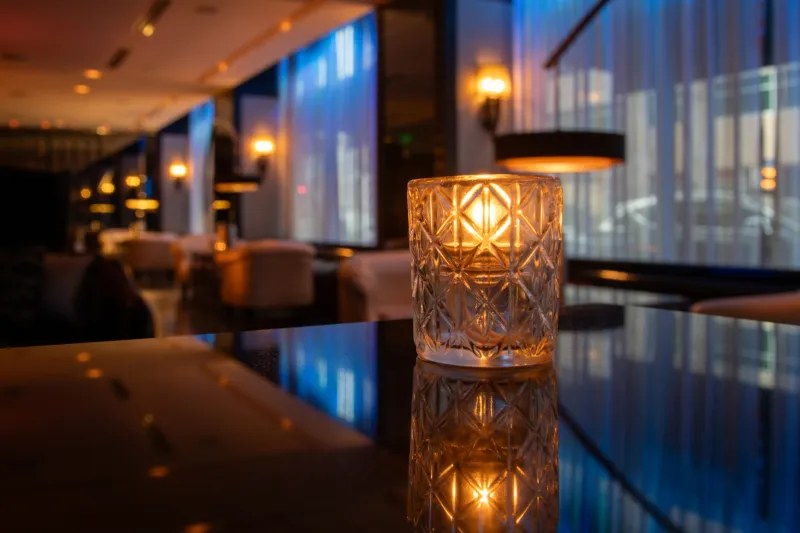
There is a moment, familiar to anyone who has ever pushed through the heavy door of a well-appointed lounge after a long day, when the city simply stops. The ambient noise of notifications, deadlines, and open browser tabs dissolves somewhere between the entrance and the first barstool. The lighting shifts. The air carries something — cedar, citrus, the faint warmth of aged spirits. And for the first time in perhaps ten hours, a person becomes fully present in their own evening.
This moment is no accident. And increasingly, it is no longer incidental.
Across the United States, a measurable shift is occurring in how urban professionals relate to the hours between the close of the workday and the start of sleep. Where those hours were once surrendered to the scroll — to streaming queues, group chats, and the ambient noise of a digitally saturated existence — they are now being reclaimed with intention. The upscale lounge, long associated with celebration and social performance, has quietly assumed a new and perhaps more significant role: sanctuary.
The Commute as Ritual Preparation
Psychologists who study workplace recovery have long identified the importance of what they call "psychological detachment" — the cognitive act of mentally stepping away from professional demands in order to restore one's capacity for engagement. For decades, the commute served this function in an imperfect but functional way. The walk to the train, the drive home, the brief interlude between office and apartment allowed the mind to decompress gradually.
That buffer has eroded. Remote work, always-available messaging platforms, and the collapse of spatial boundaries between professional and personal life have made true detachment increasingly rare. The lounge, several behavioral researchers suggest, may be filling the void.
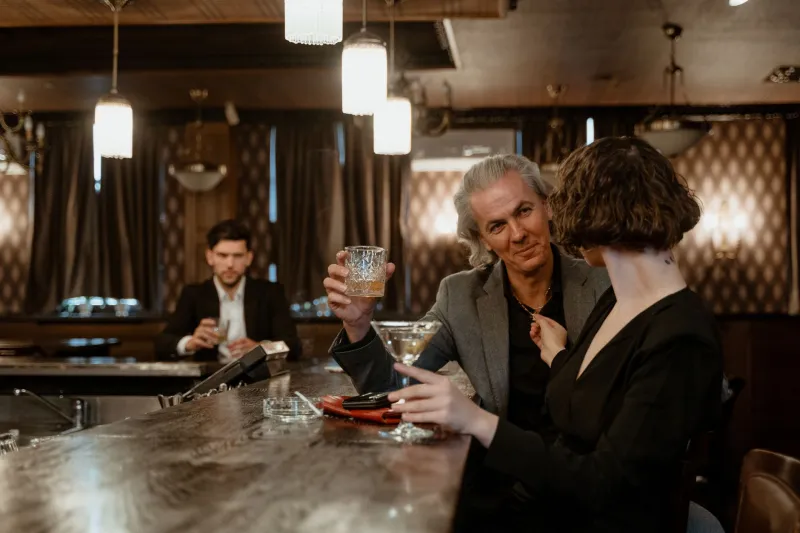
"What we're observing in our practice is that people are actively engineering transition rituals," says one New York-based therapist who works primarily with executives and creative professionals. "They're not just going out. They're going somewhere specific, with intention, as a way of signaling to their nervous system that the workday has ended. The lounge functions almost like a decompression chamber."
The walk to the venue, the act of changing clothes, the deliberate choice to leave devices in a pocket rather than on the bar — these are not coincidental behaviors. They are, for a growing number of regulars at establishments like Avenue Lounge, carefully constructed ceremonies.
Sensory Architecture and the Psychology of Arrival
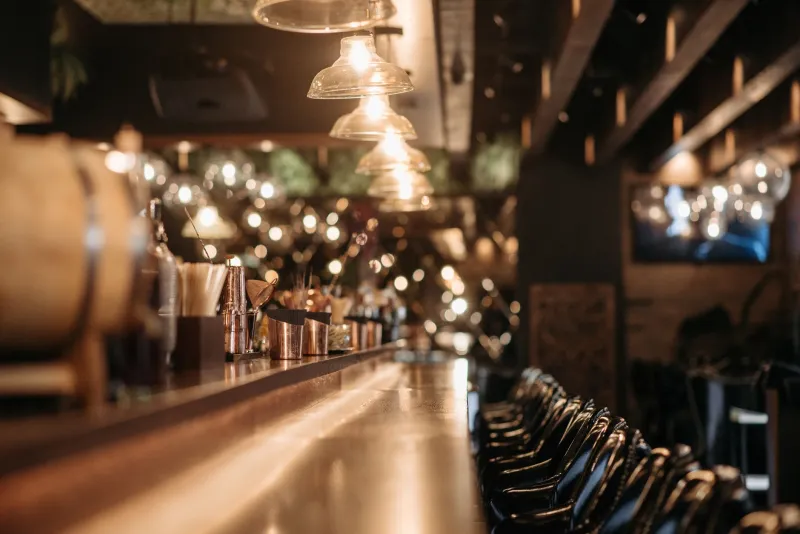
Lounge owners and designers have long understood, intuitively if not always clinically, that the experience of arriving matters as much as anything that follows. The transition from street to interior is engineered with considerable care: lighting levels calibrated to soften without obscuring, acoustics tuned to absorb rather than amplify, scent profiles chosen to evoke warmth and unhurried time.
"We spend more time thinking about the first thirty seconds of someone's experience than almost anything else," explains the general manager of a well-regarded Chicago lounge whose clientele skews heavily toward finance and technology professionals. "That threshold moment — when someone crosses into the room — is where the evening actually begins. If we get that right, everything else follows naturally."
This is not merely hospitality philosophy. Neuroscience supports the premise. Sensory environments that differ meaningfully from the spaces associated with stress and obligation can trigger measurable shifts in cortisol levels and cognitive state. The deliberate contrast of a thoughtfully designed lounge — its textures, its temperatures, its unhurried pace — communicates something to the body that the mind may struggle to articulate: you are no longer at work.
The Analog Anchor in a Digital Landscape
What distinguishes the contemporary lounge ritual from a simple trip to a bar is its relationship to technology — or more precisely, its studied distance from it. Regulars who have made the evening lounge visit a consistent practice describe a near-universal behavior: the phone goes away.
Not because the lounge demands it. But because the lounge makes it feel unnecessary.
"When I'm sitting at the bar with a well-made cocktail and good conversation either with the bartender or with whoever I've come with, I genuinely forget to check my phone," says a financial consultant in her mid-thirties who visits a Manhattan lounge twice weekly. "And that forgetting — that's the whole point. I can't manufacture that at home. The environment does it for me."
This is the paradox of the modern lounge ritual: it requires going somewhere in order to arrive somewhere. The physical act of displacement — of leaving the apartment, the home office, the co-working space — creates the psychological permission to disengage in a way that simply closing a laptop does not.
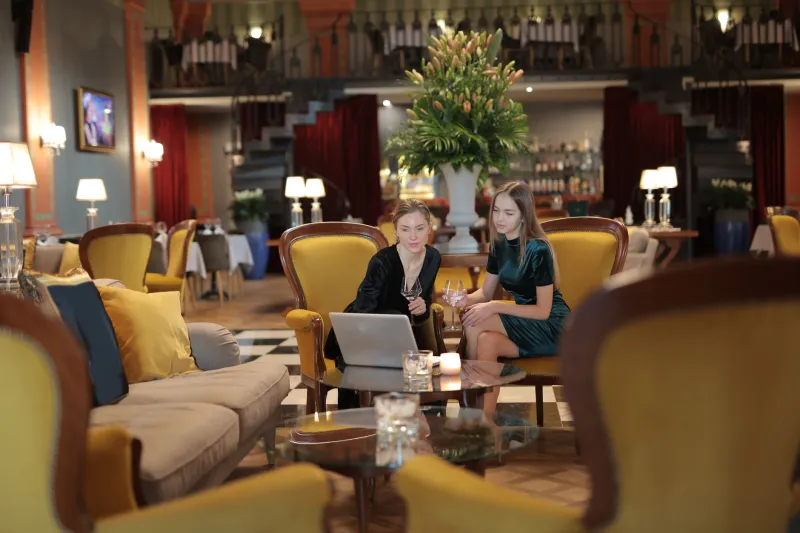
For many urban professionals, the lounge has become what sociologists call a "third place" — distinct from home and work, governed by its own norms, offering a form of social engagement that is simultaneously stimulating and restorative. Unlike the gym, which demands effort, or the restaurant, which centers on a meal, the lounge asks only for presence.
The Ritual, Not the Remedy
It would be an overstatement to position the lounge as a clinical solution to the very real mental health pressures facing American professionals. Burnout, anxiety, and digital overwhelm require more than a well-constructed Old Fashioned and a velvet banquette. The lounge owners and therapists who spoke for this piece were careful to make that distinction.
But ritual, even when modest in form, carries genuine psychological weight. The act of doing something consistently, deliberately, and with full sensory attention trains the mind to recognize a boundary — between the day that was and the evening that belongs to you.
"Ritual is essentially a form of self-permission," notes one Los Angeles-based psychologist who specializes in high-performance individuals. "When people build these lounge evenings into their week, they're not being indulgent. They're being strategic. They're telling themselves: this time is mine, and it matters."
The lounge, in this reading, is not escapism. It is the opposite — a deliberate act of presence in a world that profits from distraction.
Where the Evening Belongs to You
There is something worth protecting in the idea that the evening can be something other than an extension of the day. That the hours after work are not simply a waiting room for sleep, nor a second shift of productivity dressed in casual clothes. That a room lit warmly, a drink made carefully, and an hour spent without agenda can constitute something genuinely valuable in a life that rarely pauses.
The best lounges have always known this. What has changed is that their patrons are beginning to articulate it — not just as preference, but as necessity.
At Avenue Lounge, the evening begins the moment you decide to arrive. Everything that follows is simply the reward for having made that choice.