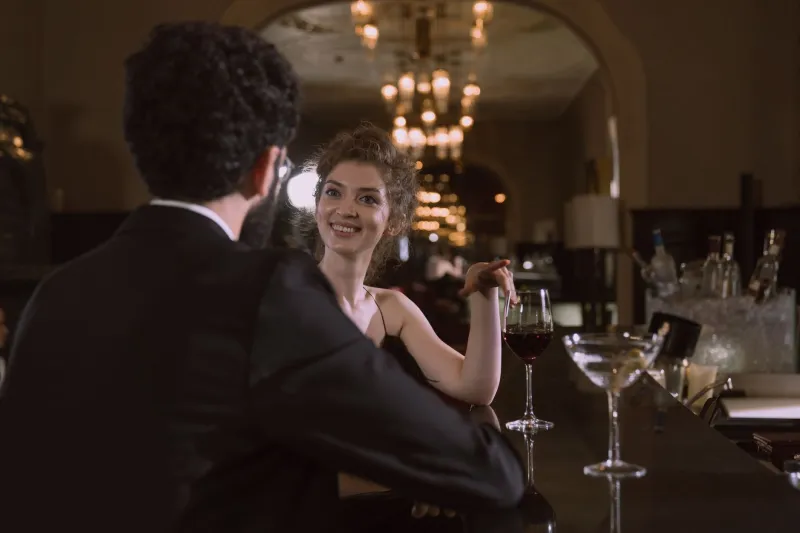
The Final Impression: How a Well-Timed Departure Defines the Entire Evening
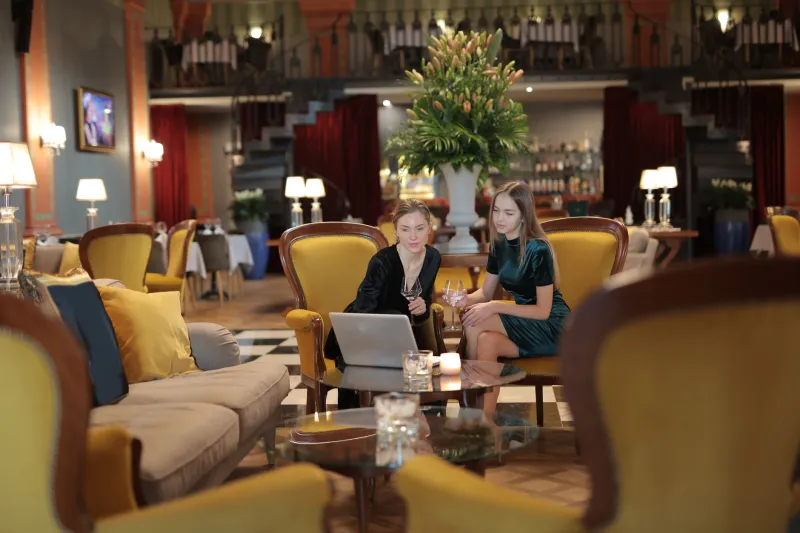
There is a particular kind of magic that inhabits a well-run lounge at its peak hour — the low amber lighting, the measured pour, the conversation that finds its own rhythm without effort. Yet for all the attention devoted to arriving correctly, dressing deliberately, and ordering with intention, remarkably little is said about the act that closes the evening. The exit, it turns out, is not merely a logistical necessity. It is a statement.
Among the unwritten codes that govern upscale nightlife, few are as nuanced — or as telling — as the art of knowing when to leave. The guest who departs at precisely the right moment leaves behind an impression that lingers long after the door closes. The guest who overstays, however subtly, risks undermining everything the evening built.
Reading the Room Before the Room Reads You
Experienced lounge patrons develop what might best be described as social peripheral vision — an awareness not only of their own table, but of the broader atmosphere surrounding it. The signs that an evening has reached its natural apex are rarely announced. They accumulate quietly.
Perhaps the music has shifted from its mid-evening warmth toward something slightly more repetitive. Perhaps the conversations around you have grown louder, more effortful, as though the room itself is compensating for flagging energy. Perhaps your own glass has sat empty a beat too long, and the impulse to order another feels more habitual than genuine.
These are not failures of the venue. They are invitations. The lounge, in its understated way, is signaling that the evening has delivered what it promised — and that the graceful move is to receive that gift and depart with it intact.
The Psychology of Closure in Social Spaces
Research in social psychology has long established that the final moments of an experience carry disproportionate weight in how that experience is ultimately remembered. The so-called "peak-end rule," developed by psychologist Daniel Kahneman, suggests that people judge an experience largely based on how they felt at its most intense point and at its conclusion — not on the average of every moment within it.
Applied to an evening at an upscale lounge, the implication is significant. A night that ends on a high note — a final round of conversation that crackled with wit, a last cocktail savored rather than rushed, a departure made while the energy still held — will be remembered as exceptional, even if earlier portions were unremarkable. Conversely, an otherwise magnificent evening that drags into diminishing returns risks being recalled as merely adequate.
The most polished lounge guests understand this intuitively. They are not leaving early. They are leaving precisely on time.
The Mechanics of a Graceful Departure
Knowing when to leave is only half the equation. The how demands equal consideration.
A graceful exit begins well before anyone rises from their seat. It starts with the quiet settling of accounts — not the dramatic flag-down of a server, but the unhurried request for a check at a natural pause in the evening's rhythm. This single act, handled with composure, communicates ease and self-possession. It signals that you are a guest in command of your own experience.
From there, the departure should feel unhurried even when it is deliberate. Brief, warm acknowledgments to companions carry more weight than extended farewells that stall the momentum you are trying to preserve. A genuine compliment to the bartender — specific, not generic — leaves a lasting impression with the staff and reinforces the kind of reciprocal relationship that transforms a one-time visitor into a welcomed regular.
Perhaps most importantly, the physical exit itself should be executed with the same composure that defined your arrival. Coats retrieved without disruption, goodbyes offered at a conversational volume rather than shouted across the room, and a final glance back — not lingering, but appreciative — before the door closes behind you.
When Staying Too Long Costs More Than You Know
It would be incomplete to discuss the graceful exit without acknowledging what its absence costs. The guest who remains past the evening's natural conclusion rarely recognizes the shift as it occurs. The conversation that once felt effortless begins to circle. The next drink arrives not out of desire but out of inertia. What was once presence becomes occupation.
Staff notice. Companions notice. And on some level, the guest themselves notices — though perhaps only in retrospect, in that particular quality of fatigue that follows a night extended beyond its ideal length.
In the context of an upscale lounge, where the experience is curated with considerable care, overstaying is not simply a social misstep. It is a misreading of the room — a failure to engage with the subtle language that well-designed spaces speak fluently. The lounge is not merely a backdrop. It is a participant in the evening, and it, too, has a natural cadence.
The Exit as a Final Act of Style
In the broader vocabulary of lounge culture, style is rarely about the obvious gesture. It lives in the considered choice, the unhurried movement, the moment of restraint where excess would have been permissible. The well-timed exit belongs entirely to this tradition.
Leaving while the evening still holds its shape — while the conversation retains its warmth, while the music still has something to say, while the memory being formed is still luminous — is among the most sophisticated things a guest can do. It demonstrates an understanding that experience has value precisely because it is finite, and that the willingness to honor that finitude is itself a form of elegance.
The best lounge nights, in this sense, are not the longest ones. They are the ones that knew when to end.
At Avenue Lounge, we believe that every element of an evening deserves the same quality of attention — from the first cocktail chosen to the final step toward the door. The night is always listening. Make sure your exit has something worth saying.