When the Bar Remembers Your Name: The Singular Magic of Returning to a Lounge You Once Called Home
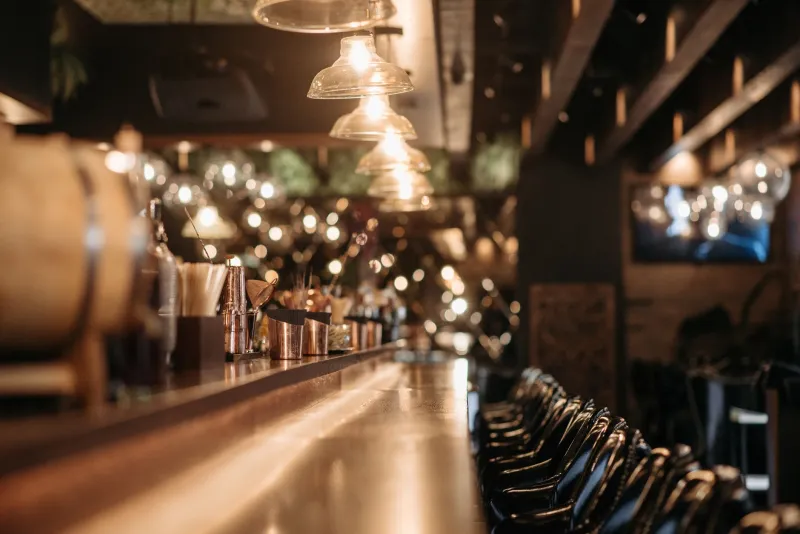
There is a particular kind of homecoming that no airport arrival or family reunion can replicate — the moment you push open the door of a lounge you once frequented and find it waiting, almost exactly as you left it. The leather is a shade darker. The playlist has shifted by a half-decade. But the amber light still pools across the bar in the same unhurried way, and the faint trace of cedar and citrus peel in the air is so familiar it nearly stops you mid-step.
Returning to a beloved lounge after a significant absence — whether measured in months or years — is one of the more quietly profound experiences available to the modern urban dweller. It is not quite nostalgia. It is something more active than that. It is a reckoning.
The Accumulation of Time in a Single Room
Life has a way of pulling people from the places they love. A job offer in another city. A relationship that restructured the evening's geography. A season of busyness that stretched, without warning, into years. Whatever the cause of the drift, the lounge remains — absorbing new guests, refining its cocktail program, cycling through bartenders — while the absent patron moves through an entirely separate chapter.
What makes the return so striking is the compression of all that elapsed time into a single threshold crossing. Marcus Delray, a bar director at a well-regarded cocktail lounge in Chicago's River North neighborhood, describes it this way: "When someone walks back in after a long absence, you can see it on their face before they even reach the bar. They're not just looking at the room. They're doing the math."
That math — the invisible calculation of who you were then versus who you are now — is precisely what distinguishes a lounge return from simply visiting a new venue. The room holds evidence. It remembers the version of you that once sat at the corner table on a Thursday, ordered the second cocktail without looking at the menu, and stayed until the playlist cycled back around.
What the Room Holds Onto
The finest lounges in America are not static institutions. They evolve — seasonally, stylistically, and in response to the shifting tastes of their surrounding neighborhoods. A craft cocktail program that once felt pioneering may have been refined a dozen times over. A jazz quartet that anchored Friday evenings may have given way to a rotating roster of emerging artists. And yet something essential persists.
That persistence is not accidental. It is, in fact, one of the most deliberate and difficult achievements in hospitality. Elena Voss, who co-owns a lounge in Nashville's Gulch district, describes the challenge as maintaining a venue's "emotional signature" even as its physical and programmatic elements evolve. "We've changed our menu, updated the lighting scheme, and brought in new talent over the years," she explains. "But the feeling of the room — the pace, the warmth, the way people settle in — that's something we protect fiercely. Because that's what people come back for."
For returning patrons, this preservation of atmosphere functions almost like a form of institutional memory. The lounge has, in some sense, been keeping a place for you.
The Bartender Who Remembers
Few gestures carry more weight upon a return than being recognized. Not in a performative or excessive way — the upscale lounge is not the place for theatrical reunions — but in the quiet, assured manner of a bartender who sets down a glass, looks up, and simply says, "It's been a while."
This recognition, when it occurs, is among the most powerful signals a venue can send. It communicates that your presence was never incidental — that you were, in some meaningful way, part of the fabric of the room. Delray notes that experienced bartenders maintain an almost encyclopedic recall of regulars who have drifted away. "You remember the people who made the room feel a certain way," he says. "And when they come back, you want them to know they were missed. You don't make a production of it. You just make them feel it."
For the returning guest, that recognition can be quietly overwhelming. It collapses the distance of years into a single exchange and offers something that contemporary life, with its relentless forward momentum, rarely provides: the sense that your absence was noticed.
The Bittersweet Arithmetic of Change
Not every element of the return is comfortable. The corner booth where you once spent a formative evening may now anchor a different configuration of furniture. A bartender whose encyclopedic cocktail knowledge once felt like a personal gift to you alone may have moved on to open their own place across town. The signature drink you ordered on autopilot may have rotated off the menu, replaced by something more current.
These small losses accumulate into a bittersweet undercurrent that runs beneath even the most joyful returns. They are reminders that the venue, like you, has continued in your absence — that it did not pause or wait, but simply persisted, growing and adjusting according to its own rhythms.
And yet this is also, paradoxically, what makes the return meaningful. A lounge that had remained entirely frozen would be a monument, not a living room. The changes are evidence of vitality. They are proof that the space you once loved was never merely a backdrop — it was an organism, and it has continued to breathe.
Rediscovering the Room as a Different Person
Perhaps the most revealing aspect of returning to a beloved lounge is what it exposes about your own evolution. The cocktail that once felt adventurous may now strike you as familiar, even conservative. The ambient noise level that once energized you may now feel like something to lean away from rather than into. The corner seat you once claimed instinctively may now hold less appeal than the quieter end of the bar.
These shifts are not disappointments. They are data. They tell you something true about the distance you have traveled since you last sat in this room. And there is a particular kind of clarity that comes from measuring that distance against a fixed point — a lounge whose essence has remained recognizable even as it has evolved.
Voss puts it simply: "The guests who come back after a long time away often tell us it's the first moment in years they've felt like themselves. I think what they mean is that they're finally in a room that knew them before everything got complicated."
The Reunion Worth Having
In an era defined by constant venue turnover — where new concepts open and shutter with startling regularity, and the average American city loses dozens of hospitality establishments each year — the lounge that endures becomes something more than a place to drink well and listen to live music. It becomes a landmark of personal history. A fixed coordinate in the shifting geography of a life.
Returning to it, after years and miles and all the accumulated weight of what happened in between, is not simply nostalgia. It is an act of orientation. You are not just revisiting a room. You are locating yourself — checking in with the version of the city, and the version of yourself, that you left behind when the chapter closed.
Order something new. Or order exactly what you used to. Either way, settle in. The room has been waiting, in its own unhurried way, for precisely this evening.