The Silent Host: How Upscale Lounges Engineer Their Spaces to Spark Genuine Human Connection
There is a particular kind of magic that occurs in a well-designed lounge—a moment when two people who arrived as strangers find themselves deep in conversation, neither quite certain how it began. It feels organic, even accidental. It is rarely either.
Behind that serendipity is an increasingly sophisticated discipline: the intentional design of social space. America's premier lounge environments are not simply decorated rooms with good lighting. They are carefully calibrated environments in which every banquette angle, every bar stool placement, and every transition between light and shadow has been engineered with a single purpose—to lower the invisible barriers between human beings and invite connection to take root.
The Geometry of Conversation
Hospitality designers who specialize in nightlife environments speak frequently about what they call "conversational geometry"—the precise spatial relationships between seating elements that determine whether two people will naturally turn toward or away from one another.
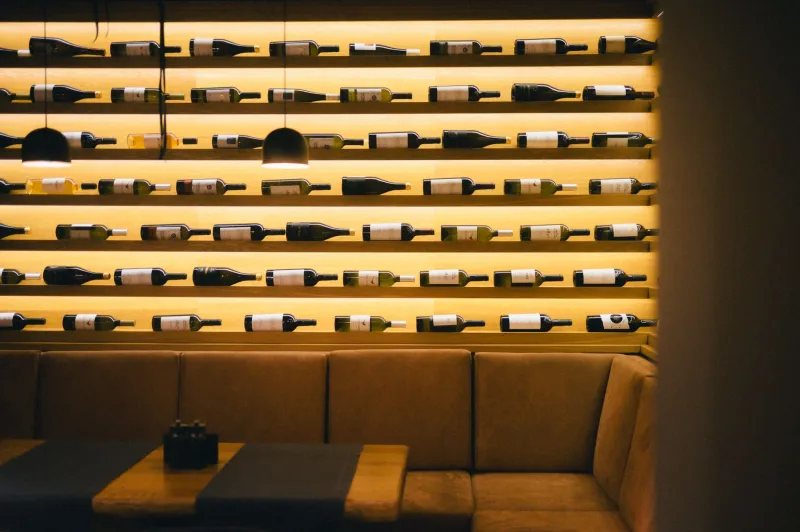
The standard restaurant booth, for instance, positions guests in parallel rows facing the same direction. It is efficient. It is also, from a social standpoint, isolating. Upscale lounge designers deliberately subvert this logic. Curved banquettes are angled inward at between fifteen and thirty degrees, a range that research in environmental psychology suggests creates a subtle sense of shared enclosure without the discomfort of forced proximity. The result is that guests seated at adjacent curves naturally orient toward one another, creating an unconscious invitation to engage.
"We think about every seat as having a sightline and a social radius," explains one New York-based hospitality designer whose firm has consulted on more than a dozen upscale lounge openings across the country. "If you can see someone easily and they can see you, and there's nothing physically separating you, the brain begins to process that as a shared space rather than adjacent private ones. That's when conversation becomes possible."
The Bar as Social Infrastructure
No element of lounge design carries more social weight than the bar itself. Its shape, its height, its relationship to the room—each decision functions as a kind of social policy, determining who will interact with whom and under what conditions.
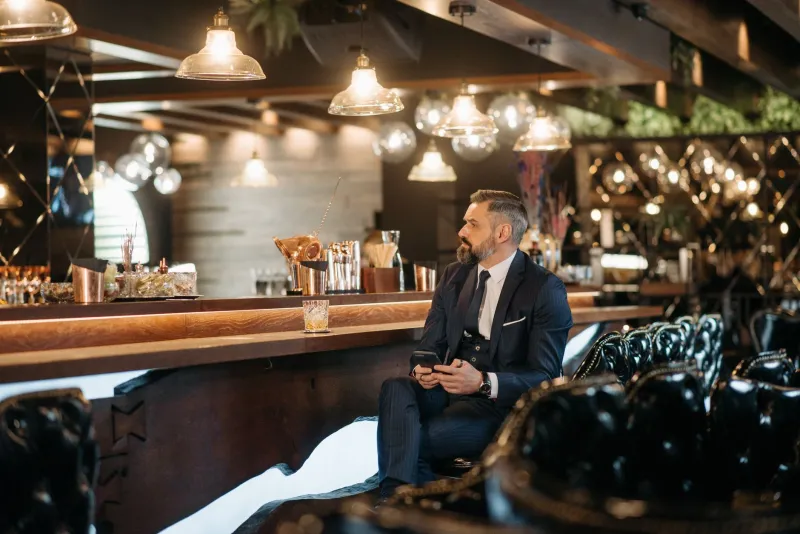
The classic straight bar, while visually dramatic, creates what designers describe as a "parade formation"—guests seated side by side, facing the same direction, with interaction limited largely to whoever happens to occupy the adjacent stool. Progressive lounge designers have largely moved away from this configuration in favor of curved, horseshoe, or peninsular bar formats that allow guests to face one another across a shared surface.
"The curve is everything," says a Chicago lounge owner who redesigned his venue's bar layout three years ago after noticing that most guests left without having spoken to anyone they didn't arrive with. "When people can make eye contact across the bar—when they're not all staring at the same wall of bottles—the whole energy shifts. The bar becomes a gathering point rather than a service counter."
Bar height also plays a role that is easy to underestimate. Counter-height seating, typically between 28 and 30 inches, places guests in a posture that environmental psychologists associate with collaborative engagement—leaning slightly forward, arms resting comfortably, eye level roughly matched with those nearby. It is, not coincidentally, the posture most people naturally adopt when they are genuinely interested in what someone else is saying.
Lighting as Emotional Architecture
If spatial arrangement determines whether conversation is possible, lighting determines whether it is comfortable. The relationship between illumination and social openness is well-documented: spaces that are uniformly bright tend to produce vigilance and self-consciousness, while spaces that are uniformly dim can feel either romantic or merely disorienting. The most socially effective lounge environments use neither.
Instead, sophisticated venues deploy what designers call "lighting zones"—graduated gradients that move from brighter, more activating light near the entry and bar areas to progressively warmer, more enveloping illumination in the seating areas deeper within the space. This gradient serves a dual psychological function. Near the bar, brighter light encourages alertness and social scanning—the instinct to look around, notice others, and remain open to interaction. In the seated areas, warmer tones signal that it is safe to relax, to lean in, to speak without the sensation of being observed.
"We think of the lighting journey as the emotional arc of the evening," notes one Los Angeles-based interior designer who has worked on several high-profile West Coast lounge concepts. "You arrive energized, you move through the space, and the light gradually gives you permission to settle in. By the time you're deep in a conversation, the room has already told you that you're in the right place for it."
Candle placement, still a fixture in many upscale venues, functions within this same logic. A single candle between two seats creates what researchers describe as a "shared focal point"—an object toward which both parties naturally orient, reducing the social pressure of sustained eye contact while simultaneously generating a sense of intimate enclosure.
Acoustic Zones and the Sound of Intimacy
Conversation requires not only the willingness to speak but the ability to be heard. Lounge acoustics represent one of the most technically complex and frequently overlooked dimensions of social design.
The challenge is paradoxical: a lively ambient soundscape signals that a venue is worth being in, but excessive noise volume forces guests to raise their voices, which both exhausts them and reduces the intimacy of exchange. The most thoughtfully designed lounges solve this through acoustic zoning—using materials, ceiling heights, and strategic placement of soft furnishings to create pockets of relative quiet within an overall environment that still feels energized.
High-backed seating elements, heavy draperies, and upholstered wall panels are not merely aesthetic choices. They are acoustic instruments, absorbing sound frequencies that would otherwise render conversation effortful. Some venues go further, commissioning acoustic consultants to map the sound distribution of a room before a single piece of furniture is placed.
"The goal is what I call 'conversational privacy at volume,'" explains one sound designer who has worked with several upscale lounge groups in Miami and New York. "You want guests to feel like they're in their own world, even in a room full of people. That feeling—that sense of a private bubble in a public space—is one of the most powerful things a lounge can offer."
The Room as Invitation
What emerges from speaking with the designers and owners who think most carefully about these questions is a consistent philosophy: the finest lounge environments are not passive backdrops. They are active participants in the social lives of their guests.
Every curve in a banquette, every warm pool of light, every carefully calibrated acoustic pocket represents a decision made on behalf of the stranger who has not yet walked through the door—a quiet assurance that when they arrive, the room itself will be working to ensure they do not remain a stranger for long.
In an era when digital screens have made it easier than ever to remain within the boundaries of what we already know, this kind of deliberate, physical social architecture carries a significance that extends well beyond interior design. The upscale lounge, at its best, is not simply a place to have a drink. It is a place engineered, with considerable care, to remind us what it feels like to be genuinely in the presence of another person.
And sometimes, that is precisely what the evening requires.