Unplug and Arrive: Why the Upscale Lounge Is Winning the War Against the Algorithm
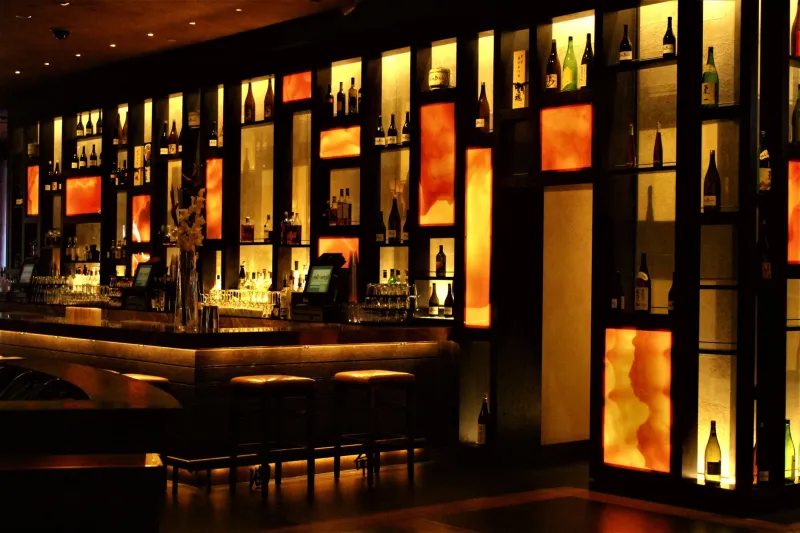
There is a particular kind of exhaustion that settles over a certain type of city dweller — the professional who has spent the better part of a decade letting software decide what to watch, what to eat, who to meet, and how to spend a Saturday evening. The feeds grow more refined, the recommendations more eerily accurate, and yet something essential keeps slipping away. That something, it turns out, has a physical address. It has low lighting, a thoughtfully composed cocktail menu, and a host who actually remembers your name.
Across American cities — from the river-facing lounges of Chicago's West Loop to the candlelit rooms tucked behind unmarked doors in Lower Manhattan — a quiet but consequential shift is underway. Upscale lounges are not merely surviving the digital disruption that has flattened so many entertainment categories. They are thriving precisely because of it, positioning themselves as the last credible refuge from a life that has been optimized to the point of sterility.
The Optimization Trap
To understand why the lounge is having its moment, it helps to understand what it is pushing back against. Streaming platforms have reduced the discovery of music to a feedback loop: you listen to what you already like, the algorithm serves you more of the same, and your sonic world quietly contracts. Dining apps rank restaurants by aggregate star ratings, funneling foot traffic toward the statistically average rather than the genuinely remarkable. Even social connection has been gamified, with dating platforms reducing human chemistry to a series of binary swipes.
The result is what cultural observers have begun calling the optimization trap — a condition in which the relentless pursuit of frictionless experience produces a life that feels, paradoxically, both curated and hollow. The surprises have been engineered out. The edges have been sanded smooth. And a growing cohort of urban professionals in their late twenties and thirties, many of whom came of age alongside the very platforms responsible for this condition, are arriving at a shared conclusion: they want their evenings back.
Serendipity as a Service
What the upscale lounge offers, at its finest, is something no algorithm can replicate: genuine, unscripted human unpredictability. A jazz quartet that decides, mid-set, to extend an improvisation for another twelve minutes because the room is responding. A bartender who steers you away from what you ordered and toward something you have never tried, based on nothing more than an instinct about your mood. A chance conversation with a stranger at the bar that alters, in some small but real way, how you think about your week.
These are not experiences that can be A/B tested or optimized for engagement metrics. They emerge from the irreducibly human act of skilled professionals reading a room in real time — and that is precisely their value.
Forward-thinking lounge operators understand this implicitly. Rather than competing with digital platforms on their own terms, the most successful venues have doubled down on what the screen fundamentally cannot deliver. Programming decisions are made by music directors with genuine curatorial vision, not by what performed well in analytics dashboards last quarter. Cocktail menus evolve through the intuition of experienced bartenders, not through consumer sentiment surveys. The guest experience is shaped, night by night, by people who have devoted their professional lives to the art of hospitality.
The Human Curation Advantage
At Avenue Lounge and venues like it, the philosophy of human curation runs deeper than aesthetics. It is an operational commitment — one that requires significant investment in talent, training, and the kind of institutional knowledge that accumulates only over years of genuine engagement with a community.
Consider the role of the host. In the algorithm economy, the digital equivalent of a host is a recommendation engine that serves personalized content based on behavioral data. The experience is efficient, frictionless, and entirely impersonal. In an upscale lounge, the host is a trained observer who can assess a guest's energy within seconds of arrival, calibrate the warmth of the greeting accordingly, and make a seating decision that shapes the entire arc of the evening. That is not a function that scales. It is not a function that can be automated. And for a growing number of guests, it is precisely the point.
This human advantage extends to the entertainment itself. Live music, in particular, has emerged as one of the most powerful differentiators in the current landscape. A performed set carries inherent unpredictability — a spontaneous key change, a moment of genuine musical conversation between performers, the particular electricity that passes between musicians and an attentive audience. These are phenomena that exist only in the present tense. They cannot be streamed after the fact with the same effect, and they cannot be replicated by a curated playlist, however sophisticated.
Younger Professionals Are Choosing the Room
Perhaps the most telling indicator of the lounge's cultural resurgence is its demographic momentum. Contrary to the assumption that younger urban professionals are irretrievably tethered to their screens, survey data and anecdotal evidence increasingly suggest that this cohort is actively seeking physical spaces that offer a deliberate alternative to digital life.
For many of these guests, the upscale lounge functions as a kind of social infrastructure — a consistent, trustworthy environment in which the rules of engagement are clear, the quality of experience is reliable, and the possibility of genuine connection is real. In cities where remote work has disrupted traditional office culture and eroded many of the incidental social interactions that once structured professional life, this function has become more important, not less.
The lounge, in this reading, is not a luxury. It is a necessity — a place where the city's creative and professional class can gather, decompress, and remember what it feels like to be genuinely present.
What the Screen Cannot Sell You
There is a moment that regulars at fine lounges will recognize: the point in the evening when the second drink arrives, the music finds its groove, and the conversation at your table takes an unexpected turn toward something that actually matters. The phones go dark. The notifications can wait. For an hour, perhaps two, the feed is irrelevant.
No platform has figured out how to manufacture that moment. No subscription service can guarantee it. It emerges from the particular alchemy of skilled hospitality, thoughtful programming, and the willingness of guests to show up in person and remain open to whatever the evening decides to become.
That, ultimately, is the proposition the upscale lounge is making to a generation that has been sold the promise of infinite personalization and found it wanting. Come into the room. Surrender the algorithm, at least for one night. Let the evening be unpredictable.
The city, it turns out, has been waiting.